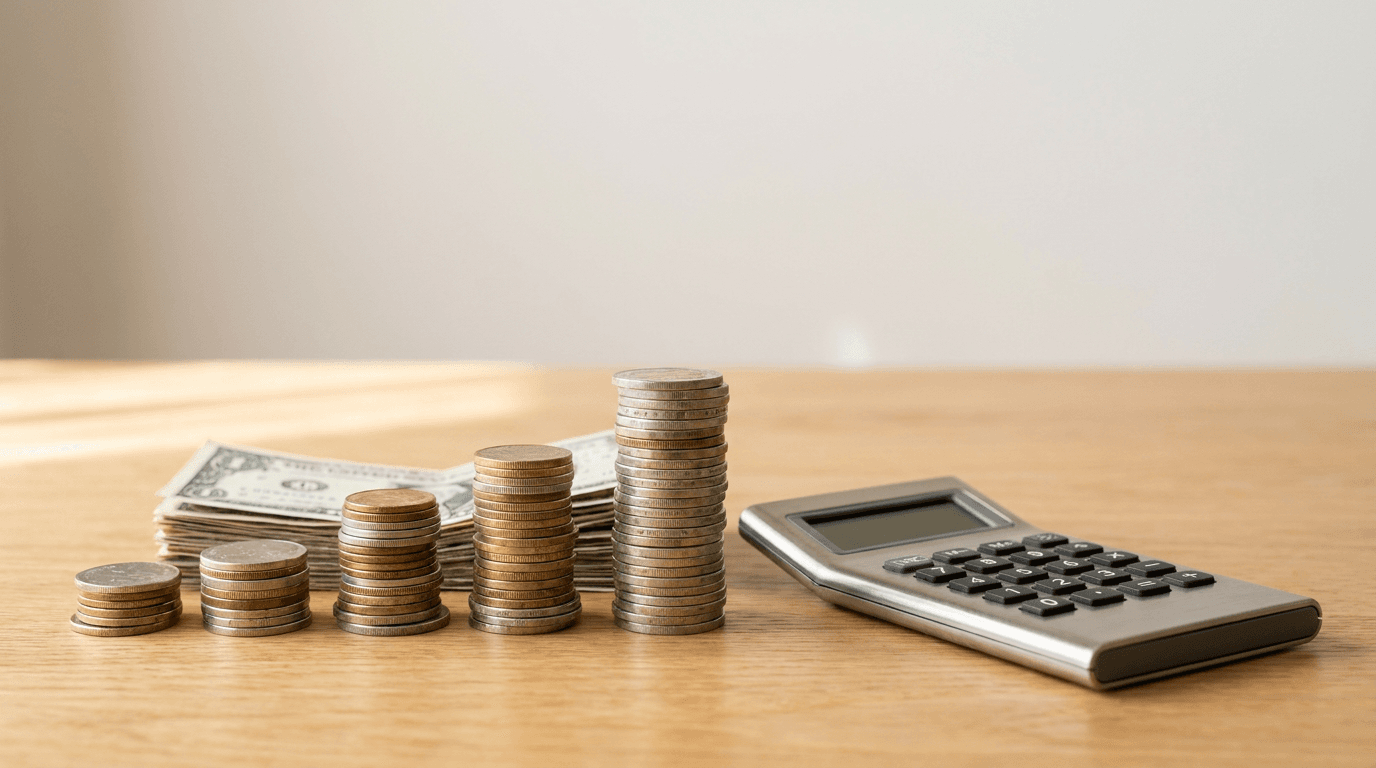
Ask five brands what a UGC video costs and you'll get five different numbers. All of them can be correct, because "a UGC video" isn't one product. It's a bundle of variables: the creator's experience level, whether you're licensing the content for paid ads or organic use only, how many revisions are included, and whether you're sourcing directly or through a managed platform.
This guide separates those variables so you can budget against your actual situation instead of anchoring on a single number that may not apply. For the sourcing process itself, see our broader guide: hire UGC creators, the brand's complete sourcing guide.
A single photo, organic use only, typically runs $50 to $150. A single short-form video of 15 to 60 seconds with organic rights only usually costs $100 to $300. Add paid-ad usage rights to that same video and the price moves to roughly $150 to $500, since the creator is now licensing the content for a wider, revenue-generating use.
Multi-video packages, three to five videos from one shoot, are typically discounted 15 to 30% per video against one-off pricing, since the creator can batch production. Whitelisting, or licensing usage rights on an influencer's existing organic post, sits in a separate category entirely: often $500 to $2,000 or more depending on the creator's following, because you're paying for existing distribution as well as the content.
Usage rights are the single biggest price lever here. The same video costs meaningfully more once you're running it as a paid ad rather than posting it once on your own channels.
New creators, roughly zero to six months in and still building a portfolio, often price at $50 to $150 per video since they're competing to land their first brand relationships. Established creators with a track record typically land in the $150 to $400 range, reflecting reliable delivery and a proven ability to hit brief requirements.
Top-tier creators with a strong reaction history and demonstrated ad performance can run $400 to $1,000 or more per video, particularly in niches like finance, beauty, or tech where credible, on-camera expertise is scarce.
Rates from the creator's side of this are covered in more depth in our companion guide: UGC creator rates: how much to charge in 2026, worth reading for brands too since it shows how creators actually think about pricing their own work.
The sourcing model changes your total cost as much as the creator's rate does. Managed agency platforms typically run $3,000 to $25,000 or more per month for ongoing programs, bundling creator sourcing, project management, and quality control into one fee. Convenient, but the markup is significant.
Self-serve marketplaces charge no platform fee beyond the per-video creator rate, but vetting and project management time sits with your team. Free-to-post job boards, Be on Reel among them, cost nothing on the platform side: you post a job, review applicants filtered by niche, language, and location, and pay creators directly. For brands willing to do their own applicant review, the savings against a managed agency add up quickly.
For a fuller breakdown of how these platform types differ beyond price, see our UGC platform comparison.
A reasonable starting budget for a brand testing UGC seriously for the first time looks like eight to twelve videos across four to six creators per month, at $150 to $400 per video with paid-usage rights. That's roughly $1,200 to $4,800 a month sourced directly, and considerably more through a managed agency once the markup is included.
The efficient way to spend that budget is testing broadly before scaling narrowly: brief several creators with different hooks and angles, see what the data says, then put next month's budget behind whichever creators and concepts actually performed. For the channel-specific version of this, sourcing and briefing for TikTok in particular, see TikTok UGC ads. And for the broader question of how UGC fits your overall content plan, read UGC content strategy for brands.

UGC Creator Marketplace: The Complete Guide for Creators
What a UGC creator marketplace actually does for you, how the major ones differ, and how to build a profile that gets you hired instead of ignored.
Read
TikTok UGC Ads: How Brands Source and Scale Creator Content
TikTok's algorithm rewards content that doesn't look like an ad. Here's how brands source, brief, and scale UGC creators specifically for the platform.
Read
Best UGC Platforms for Brands: Honest Comparison (2026)
Billo, Collabstr, JoinBrands, MiniSocial, Trend, Be on Reel: how the major UGC platforms actually differ on pricing, vetting, geography, and file quality.
Read
